
Christian Forgiveness Steps: A Practical Path When It Hurts


Christian forgiveness is a decision to release a wrong to God, made with his help and repeated as often as the pain returns. It is not a feeling you wait for. It does not mean the wrong was small, and it does not oblige you to trust the person again. Below is a seven-step path drawn from Scripture and from Christian teachers, with plain answers to the questions that usually stall people: what to do when you still feel angry, how forgiveness differs from reconciliation, and when to bring someone alongside you.
TL;DR
Forgiveness starts with God. He is the one most offended by every sin, and he has forgiven us far more than anyone will ever owe us.
The steps: name the hurt, look to God, decide to forgive, deal with the anger, release justice to God, set wise boundaries, pray for the person.
Forgiving is something you can do alone. Reconciliation needs two people and depends on repentance and rebuilt trust.
You will probably need to forgive more than once. Treat it as a journey, ideally in prayer and with a trusted person or professional.
If the hurt is deep, abuse is involved, or you feel stuck, speak to a pastor, counsellor or doctor.
Table of Contents
What forgiveness means in the Bible
Before the steps, it helps to know what we are aiming at. Moore Theological College, in its Sydney-based teaching on the journey of forgiveness, points out that true forgiveness finds its starting point with God, because in all sin he is the primary offended party. It also notes that a Christian who has acknowledged a wrong must either forgive or repent, and that this is unconditional: we do not wait to see whether the other person will also forgive or repent.
That last point is both hard and freeing. We forgive because God has forgiven us. Paul puts it plainly: ‘Be kind and compassionate to one another, forgiving each other, just as in Christ God forgave you’ (Ephesians 4:32). Jesus teaches the same in the prayer he gave his disciples, and then adds a sober line in Matthew 6:14-15 about the link between the forgiveness we receive and the forgiveness we give.
Forgiveness, then, is not pretending. Adventist.org describes it as recognising that we have been hurt while choosing to release ourselves from that pain and from the wish for revenge, even when the other person never asks or admits fault. The same page makes a point worth keeping close: God forgiving us does not mean he forgets or downplays what we did. Forgiveness takes the wrong seriously. That is why it costs something.

Seven steps to forgive someone
Christian writers lay out the path in different numbers: three, four, seven, eight. They overlap heavily. What follows is a sequence we find honest and workable, with the sources for each part.
Step 1: Name what happened and how it hurt
Forgiveness cannot begin with a vague sense that ‘something was off’. Adventist.org’s guidance on how to forgive when others hurt us says to recognise that you were hurt, define clearly what happened, how and why it hurt, and identify the emotions you felt. Write it down if that helps. Be specific: what was said or done, what it cost you, what you felt.
The Psalms give us permission for this kind of honesty. ‘The Lord is close to the brokenhearted’ (Psalm 34:18). God is not shocked by the size of your hurt.
Step 2: Look to God first
Bill Gaultiere’s seven steps of forgiveness, published by Soul Shepherding, begin with looking to God before doing anything else. We agree with the order. Without God, forgiveness becomes a performance of willpower. With him, it becomes a response.
Pause here and remember your own account. Think of what you have been forgiven. David’s prayer in Psalm 51 is the model Moore Theological College draws on: a man who knew that his sin was, at its root, against God. If you have not yet settled that question of your own standing before God, our guide on how to become a Christian is a good place to begin, and the plain guide to how to confess sin walks through bringing your own failures to him.
Step 3: Ask for the ‘want to’, then decide
Many of us do not want to forgive. That is a normal place to start, and it is not the end of the road. Ask God to give you the willingness. Then make a decision. Joyce Meyer’s four steps to forgiveness begin with making a quality decision, and she stresses that forgiveness is a serious decision you may need to make again and again.
Colossians 3:13 gives the command and the reason: ‘Bear with each other and forgive one another if any of you has a grievance against anyone. Forgive as the Lord forgave you.’ A decision is a act of the will. Feelings follow later, sometimes much later.
A simple way to say it aloud: ‘I choose to forgive [name] for [specific thing]. I will not make them pay me back.’
Step 4: Deal with your anger and feel your hurt
Skipping this step is why many attempts at forgiveness collapse. Gaultiere’s list gives space to dealing with anger and feeling the hurt, not suppressing them. Meyer’s third step is understanding your emotions: your will gives you the ability to live beyond your feelings, but it does not require you to deny them.
In practice this means:
Tell God exactly how angry you are. The Psalms do this constantly.
Name the layers underneath the anger: fear, shame, grief, loss of trust.
Give yourself time. Churches Together SA observes that emotional pain often takes longer to heal than physical pain and that its unseen nature makes it hard to identify, even for the person suffering. They recommend walking through the process in prayer, with another trusted person or a professional.
If you find the pain is wearing you down, our guide to church and mental health explains how pastoral care and professional help can work together rather than compete.
Step 5: Release the debt and entrust justice to God
Romans 12:19 says, ‘Do not take revenge, my dear friends, but leave room for God’s wrath.’ Releasing the offender does not mean the wrong goes unanswered. It means you hand the judging to the One who judges rightly.
Dr Tim Keller put the relationship between forgiveness and justice in a way many find clarifying. As quoted by RELEVANT magazine, he said forgiveness is not the opposite of doing justice but a precondition for pursuing it, because without forgiving first you end up pursuing vengeance. So forgiving someone does not stop you reporting a crime, raising a complaint or seeking protection. It purifies your motive for doing so.
Step 6: Set wise boundaries
Forgiveness and safety are not rivals. Gaultiere notes that when patterns of mistreatment are identified, wise boundaries on expectations and interactions matter. The FDM resource on forgiveness and reconciliation likewise says that some reconciled relationships will still need wise boundaries.
Adventist.org adds a caution worth underlining: while Matthew 18:15-17 offers an outline for conversations with the person who hurt you, there are situations where meeting them is neither wise nor safe. If you are dealing with abuse or threats, do not attempt a face-to-face conversation to prove your forgiveness. Speak first to a pastor you trust, a counsellor, or the relevant support service.
Step 7: Pray for the person who hurt you
Jesus said, ‘Love your enemies and pray for those who persecute you’ (Matthew 5:44). Both Meyer and Gaultiere end their lists here. Prayer for the offender is where forgiveness stops being an idea and starts changing your heart. You do not have to feel warm. You only have to ask God to bless them, to bring them to repentance and to deal with them mercifully.
A short prayer for when you are ready
A prayer does not need polished words. You might pray something like this in your own voice:
Father, what happened to me was wrong, and it hurt. I bring all of it to you. I forgive [name], and I give up my demand to repay them myself. I leave justice with you. Do not let this pain rule my thoughts or my reactions. Show me what love and wisdom ask of me now, including any boundaries I need. Amen.
If prayer feels dry, our short guide to Bible prayers to pray now gives you Scripture to borrow when your own words run out.
When you still feel hurt or angry
This is where most people live for a while. You have decided to forgive, and then the memory returns at 3 am and the anger is as fresh as ever. That does not mean the forgiveness failed.
Meyer’s point that forgiveness is decided repeatedly is the key. Think of it as paying off a debt in instalments of the will. Each time the memory rises, you say again: ‘I have released this to God.’ Over weeks and months the memory loses its grip.
A few practices help:
Keep a short written record of what you have forgiven, so you can return to it rather than relitigating.
Pray for the person by name when the thought comes, even for one sentence.
Talk to someone. Churches Together SA recommends travelling the process with another trusted person or a professional, and the hardest cases need exactly that.
Guard your body. Sleep, food and movement all affect how heavy old pain feels.
Sometimes the hurt runs deeper than a conversation with a friend can carry, particularly for younger people. Specialist behavioural healthcare for young adults exists for those moments, and seeking it is not a failure of faith. Your GP is another good first stop.
If the person who hurt you was part of a church, the road is often harder. We have written separately about that in I was hurt by church: should I come back?
Forgiveness is not the same as reconciliation
This distinction rescues many people from guilt. The FDM resource states that forgiveness can be given to anyone who has caused you pain, while godly reconciliation applies to previously existing relationships that have been broken.
Steve Cornell, writing for Church21 at Biblical Counselling, says forgiveness is always required by God but does not always lead to reconciliation, and that reconciliation is often conditioned on the offender’s attitude and actions. He adds that God’s forgiveness of us does not promise to remove every consequence of our actions, and that someone deeply hurt does well to look for real change in the offender before restoration begins.
RELEVANT magazine puts it memorably: forgiveness is something you can do alone, while reconciliation is a team sport. It points to Luke 17:3, where Jesus gives the order: rebuke, then repentance, then forgiveness.
Here is a quick comparison:
Forgiveness | Reconciliation | |
Who is involved | You and God | Both people |
Requires the other’s apology | No | Yes, with real change |
Restores trust | Not by itself | Rebuilds it over time |
Can happen at a distance | Yes | Only where closeness is wise |
Commanded for every wrong | Yes | Where it is possible and safe |
The church’s own guidance for abuse survivors is clear on responsibility. The National Council of Churches in Australia’s document on forgiveness and reconciliation for survivors of sexual abuse says the perpetrator, not the person wronged, is responsible for genuine repentance, restoration and reconciliation. Churches Together SA adds that forgiveness does not mean accepting unacceptable actions, and that nobody can force forgiveness from you, because that would become another injury.
None of this lets you off the hook of forgiving. It lets you off the hook of pretending that nothing happened.
What if you are the one who needs forgiving?
The path runs the other way too. Adventist.org outlines three steps for receiving God’s forgiveness: acknowledge his love, admit we have missed the mark, and work with him on a plan for growth. Our guide to repentance and faith explains how these two belong together, and the guide to confessing sin gives practical wording.
When asking someone you have wronged for forgiveness, the FDM resource suggests being specific about the offence. Churches Together SA reminds us that it is not our place to expect forgiveness from someone we have wounded. Ask humbly, repent in actions, and leave the timing with them.
The FDM resource also lists asking forgiveness for harbouring bitterness as one of its steps. Often the person who has been wronged also has something to confess: the resentment they nursed afterwards. That is not blaming the victim. It is the freedom of clearing the whole account.
Forgiveness in the life of a church
Forgiveness was never meant to be a private project. The early church was a community of people forgiven and forgiving, and it is within that community that many of us learn to do it. We explore this more fully in the role of forgiveness in church.
Sometimes forgiveness runs alongside other heavy seasons: grief, loneliness or addiction. If you are in Canberra and any of these sound like you, you do not need to carry them alone.
Our perspective
We have sat with people at every point on this road: the student far from home who cannot shake a betrayal, the new resident carrying an old family wound, the long-time believer who is quietly ashamed that they still feel angry. Here is what we hold. Forgiveness is a work of the kingdom, and it is first a work of God. We do not manufacture it. We receive mercy at the cross and we pass it on, slowly and imperfectly, like seeds planted that take a season to break the surface. We also hold that forgiveness is not a Sunday-only discipline. It happens in kitchens, workplaces, flats and group chats. That is why we want to be a community that is local and relational, not simply a gathering. Honest faith exploration needs people who will listen to your hardest question and not flinch, and who will pray with you when the words will not come. If you are hurting, you are not too much for us. Come as you are, with the anger and the questions. We will walk it with you. Josh
Walk this road with people
Forgiving is lighter when you are not doing it alone. Divergent Church is a Christian community in Canberra shaped by Scripture and centred on Jesus, with a particular heart for students, new residents and anyone exploring faith honestly. You are welcome to come, ask your questions and meet people who will pray with you.
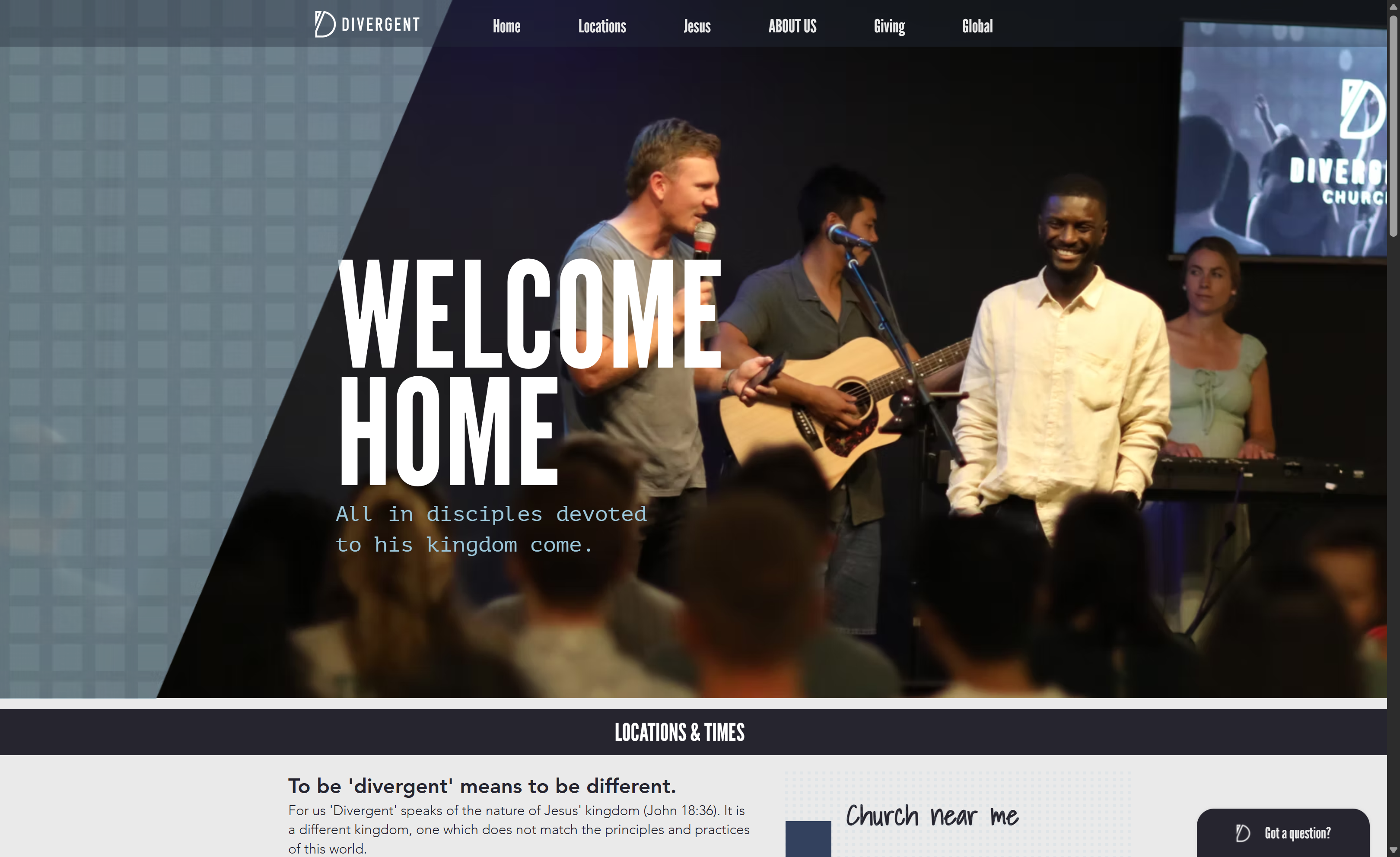
You can find out more and get in touch through the Divergent Church website.
FAQ
How do I forgive someone who never apologised?
You forgive anyway, because forgiveness is something you can do alone, and it starts with God rather than with the other person’s apology. Moore Theological College notes that Christian forgiveness is unconditional and does not wait for the other person to forgive or repent. Reconciliation is a separate matter and does need their repentance.
Does forgiving mean I have to trust them again?
No. Forgiveness releases the debt, while trust is rebuilt only as someone shows real change over time. Christian writers on this topic say some relationships will need lasting boundaries, and in situations involving abuse or danger, it may not be safe to restore contact at all.
What if I forgive and then feel angry again?
That is common and does not cancel your forgiveness. Forgiveness is a decision you may need to make repeatedly, as the memory returns. Pray, name what you have released to God, and talk it through with a trusted person or professional if the pain stays heavy.
What is a simple Christian prayer for forgiving someone?
Name the wrong honestly, say that you release your demand to repay the person, ask God to keep the pain from ruling your reactions, and ask him to show you what love and wisdom require now. Add the person’s name and pray for their good. A sample prayer is given above.
Is forgiving someone the same as saying what they did was okay?
No. Forgiveness takes the wrong seriously enough to hand it to God. Churches Together SA is clear that forgiveness does not mean accepting unacceptable actions, and Tim Keller argued it is a precondition for pursuing justice without vengeance.
Sources
Recommended
Comments