
The role of youth in church: a guide for young leaders


The role of youth in church is that of active, contributing members who lead, serve, and shape their communities right now, not at some distant point in the future. Scripture makes this plain: 1 Corinthians 12:12–14 describes the church as one body with many parts, and no part is optional or premature. Research confirms that youth with meaningful relationships with five or more adults beyond their parents develop significantly higher faith resilience. That finding reframes everything. Youth are not passengers waiting for a seat at the table. They are already seated, and the church is stronger when they speak.
What is the role of youth in church leadership and decision-making?
Youth hold genuine leadership roles in church life, and the structures that support this matter enormously. Churches with youth councils and volunteering roles show increased retention and spiritual maturity among young members. That is not a minor benefit. It means that when a church gives youth real responsibility, those young people stay and grow deeper in faith.
Practical leadership opportunities include:
Youth councils that advise church leadership on programming, outreach, and community needs
Open forums where young people present ideas directly to elders and pastors
Worship team roles including leading music, reading Scripture, and preaching
Ministry planning for events, small groups, and service projects
Volunteer coordination for hospitality, children’s ministry, and community outreach
The “give the mic away” model is one of the most effective frameworks for youth leadership development. In this approach, adult leaders shift from being the primary voice to becoming coaches. Youth lead worship, preach, and plan ministry with adult support rather than adult control. The result is a generation of young disciples who own their faith rather than inherit it passively.
Adult mentorship remains non-negotiable alongside this. Youth leadership without relational support produces burnout, not growth. The goal is partnership, not performance.
Pro Tip: If your church does not yet have a youth council, propose one to your pastor with a simple one-page outline. Describe three decisions youth could meaningfully contribute to, and offer to chair the first meeting yourself.
How does youth involvement energise parish life and outreach?
Youth engagement revitalises parish culture by fostering intergenerational dialogue and modernising how faith is expressed. That is not sentiment. It is what happens when young people bring their creativity, energy, and perspective into spaces that have grown comfortable with routine.
The contributions youth make to parish life are wide-ranging:
Fresh creativity in worship design, social media presence, and event planning
Social justice engagement through community service, advocacy, and outreach programmes
Peer-to-peer evangelism that reaches young people outside the church in ways adults cannot
Intergenerational collaboration that strengthens the whole community’s sense of shared purpose
Long-term parish vitality as young members grow into adult leaders who stay connected
Serving alongside adults helps youth feel known, combats loneliness, and builds church unity. That matters in a city like Canberra, where transient populations and university culture can make belonging feel fragile. When youth are genuinely woven into parish life, they become anchors for others who are searching for community.
Service also translates faith into action in ways that no sermon alone can achieve. A young person who spends a Saturday morning serving at a food bank understands the kingdom of God differently than one who only hears about it from a pew. Youth contributions to faith are most durable when they are embodied, not just intellectual.

Effective volunteer recruitment strategies used by nonprofits and churches alike confirm that young volunteers stay engaged when they are given meaningful roles with real responsibility. Token involvement produces token commitment.
Why must youth serve alongside adults in the church?
Intergenerational integration is the single most protective factor for youth faith development. Isolated youth programming can create faith echo chambers that limit resilience. When young people only ever encounter faith through peers their own age, they miss the lived testimony of adults who have walked through grief, doubt, and renewal.
The Sticky Faith research from the Fuller Youth Institute identifies a clear threshold: youth who have relationships with five or more adult mentors beyond their parents carry a faith that endures beyond adolescence. Each of those adults mirrors Christ in a different way, and together they form a protective community around a young person’s spiritual life.
Intergenerational integration requires youth and adults serving alongside one another, not just adults pouring into youth. The relationship flows both ways. Adults learn from the questions youth ask, and youth learn from the endurance adults model.
Worship language shapes this belonging more than most churches realise. When services consistently use language that separates “the youth programme” from “the main church,” young people internalise that separation. They begin to see themselves as guests rather than members. Inclusive language in worship, where youth are named as full contributors to the body of Christ, builds a sense of belonging that structural programmes alone cannot create.
The church is not a school with a youth wing. It is a multigenerational family, and families function best when every generation contributes to the shared life.
Pro Tip: Ask your church to assign one adult mentor to each young person involved in ministry, not as a supervisor but as a genuine friend. Regular coffee catch-ups matter more than formal discipleship meetings.
Practical ways youth can support and shape their church
Young people often underestimate how much influence they already carry. The question is not whether you have something to offer. The question is where to start.
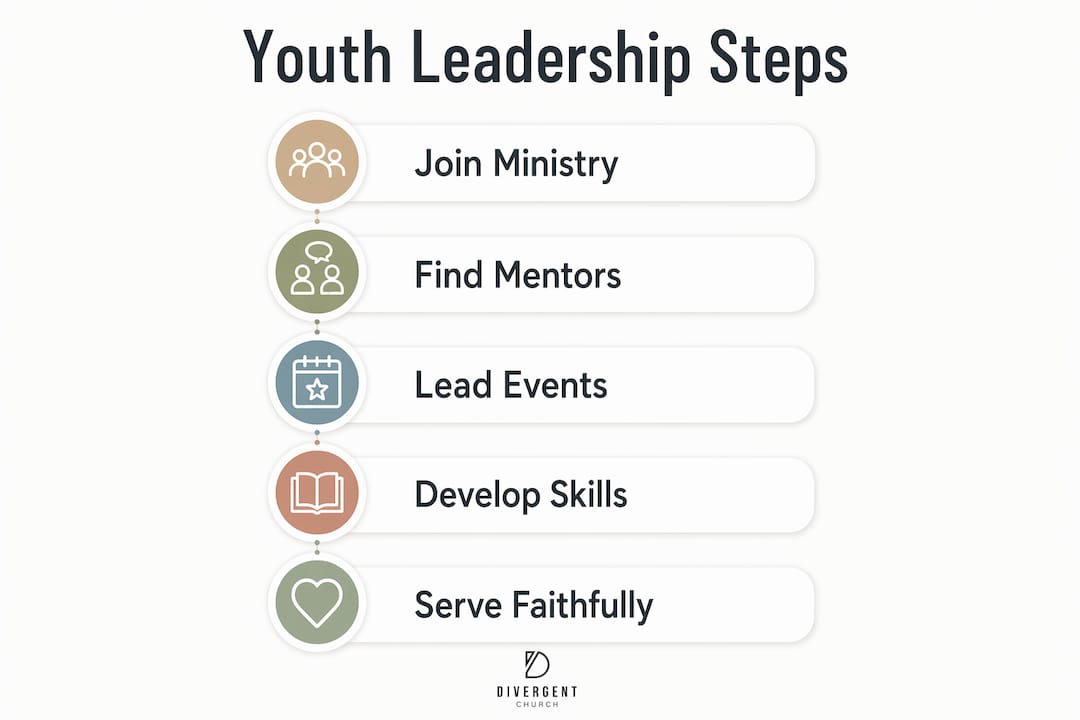
Here are five concrete ways to begin:
Join a ministry team. Hospitality, children’s ministry, and the worship team all need consistent, committed people. Show up, serve faithfully, and let your character speak before your ideas do.
Pursue a mentorship relationship. Identify an adult in your church whose faith you respect and ask them to meet regularly. Come with questions. Be honest about your doubts.
Propose a youth-led event. Plan a community service day, a worship night, or a neighbourhood outreach project. Present it to your pastor with a clear plan and a team already assembled.
Develop your communication skills. Volunteer to read Scripture publicly, lead a small group discussion, or contribute to your church’s social media. Young adults in church who practise public faith expression grow in confidence and depth.
Create welcoming spaces. Be the person who notices the new face at Sunday gathering. Introduce yourself, sit with them, and connect them to others. Belonging begins with one conversation.
Youth at Divergentchurch are encouraged to step into these roles from the moment they arrive. The expectation is not perfection. The expectation is participation.
Youth who lead music, liturgy, and preaching develop deeper faith and stronger leadership skills than those who observe from the margins. The act of leading is itself formative. It forces young people to wrestle with Scripture, to pray with intention, and to take their faith seriously as something they are responsible for passing on.
Pro Tip: Start small and stay consistent. One faithful commitment to a single ministry team for six months will shape your character more than five half-hearted involvements ever could.
Key takeaways
Youth are full, present contributors to church life whose leadership, service, and intergenerational relationships strengthen both their own faith and the vitality of the entire church body.
Point | Details |
Youth lead now, not later | Structural roles like youth councils and worship leadership build faith and retention today. |
Intergenerational relationships are protective | Youth with five or more adult mentors beyond parents develop significantly stronger faith resilience. |
Service translates faith into action | Serving alongside adults combats loneliness, builds belonging, and deepens spiritual maturity. |
Worship language shapes belonging | Inclusive language in services helps youth see themselves as equal members of the church body. |
Consistent commitment produces growth | One faithful ministry role sustained over time forms character more than scattered involvement. |
Youth are the church now: a personal reflection
I have watched young people transform a church community simply by being given permission to lead. Not supervised. Not managed. Actually trusted.
The churches I have seen thrive are the ones where a 19-year-old preaches and the elders listen, where a teenager runs the welcome team and the pastor asks her what she noticed about the visitors. These are not progressive experiments. They are the church functioning as Scripture describes it: every part contributing, every member valued.
What I find most striking is how quickly adults underestimate youth when they are not given responsibility, and how quickly they are astonished when they are. The capacity was always there. The invitation was missing.
The hardest part of empowering youth is not logistics. It is trust. Adults who have built something over decades find it genuinely difficult to hand the microphone to someone who has not yet lived through what they have. I understand that. But the alternative is a church that slowly ages out of relevance while its young people drift toward communities that actually want them.
At Divergentchurch in Canberra, the commitment to youth in leadership is not a programme. It is a conviction. Young people are not the future of the church. They are the church, right now, and the community is richer for it.
— Josh
How Divergentchurch supports youth leadership and discipleship
Divergentchurch in Canberra has built its community around the conviction that every person, regardless of age, has a contribution to make to the body of Christ.
The Discipleship Hub offers resources and community pathways designed to help young people grow in faith and step into leadership with confidence. For those ready to go deeper, the LEAD LIKE JESUS programme provides practical training in servant leadership grounded in Scripture. Life Communities offer small groups where youth and young adults find genuine belonging, honest conversation, and the kind of intergenerational relationships that make faith stick. If you are working out where to begin, these communities are a natural starting point.
FAQ
What is the role of youth in church today?
Youth are active, contributing members of the church body who lead worship, serve in ministry, and shape community life alongside adults. Their role is present and vital, not reserved for the future.
Why is youth involvement in church important?
Churches with structured youth involvement show stronger retention and spiritual maturity among young members. Youth also energise parish culture and bring creativity and fresh perspective to faith expression.
How can youth support their church community?
Youth can join ministry teams, pursue mentorship relationships, lead events, develop public communication skills, and create welcoming spaces for peers and newcomers.
How many adult mentors does a young person need for strong faith?
Research links a threshold of five or more adult mentors beyond parents to significantly higher faith resilience in young people. Each mentor reflects Christ differently and together they form a protective community.
Does worship language affect how youth feel in church?
Worship language that separates youth from the main congregation can unintentionally create a sense of hierarchy. Inclusive language that names youth as full contributors builds belonging and strengthens their identity within the church body.
Recommended
Comments