
The role of prayer in church: why it matters


Prayer in church is defined as the collective act of communicating with God, and it forms the spiritual backbone of every healthy Christian community. The role of prayer in church extends far beyond Sunday ritual. It shapes identity, builds unity, and anchors a congregation’s entire sense of mission and purpose. From the earliest disciples gathered in Acts 2:42 to communities like Divergent Church in Canberra today, corporate prayer has always been the means by which the church expresses its dependence on God rather than its own competence. This article unpacks why prayer is not optional in church life, and what happens when a community takes it seriously.
How does prayer unify the church community during worship?
Corporate prayer is the single most powerful unifying force available to a congregation. When believers pray together, they share the same posture of humility before God, and that shared posture dissolves the social distances that otherwise divide people. Prayer reduces social barriers and fosters empathy, compassion, and mutual spiritual support within the church community. This means that prayer is not simply a spiritual transaction between an individual and God. It is a communal act that reshapes how people see and relate to one another.
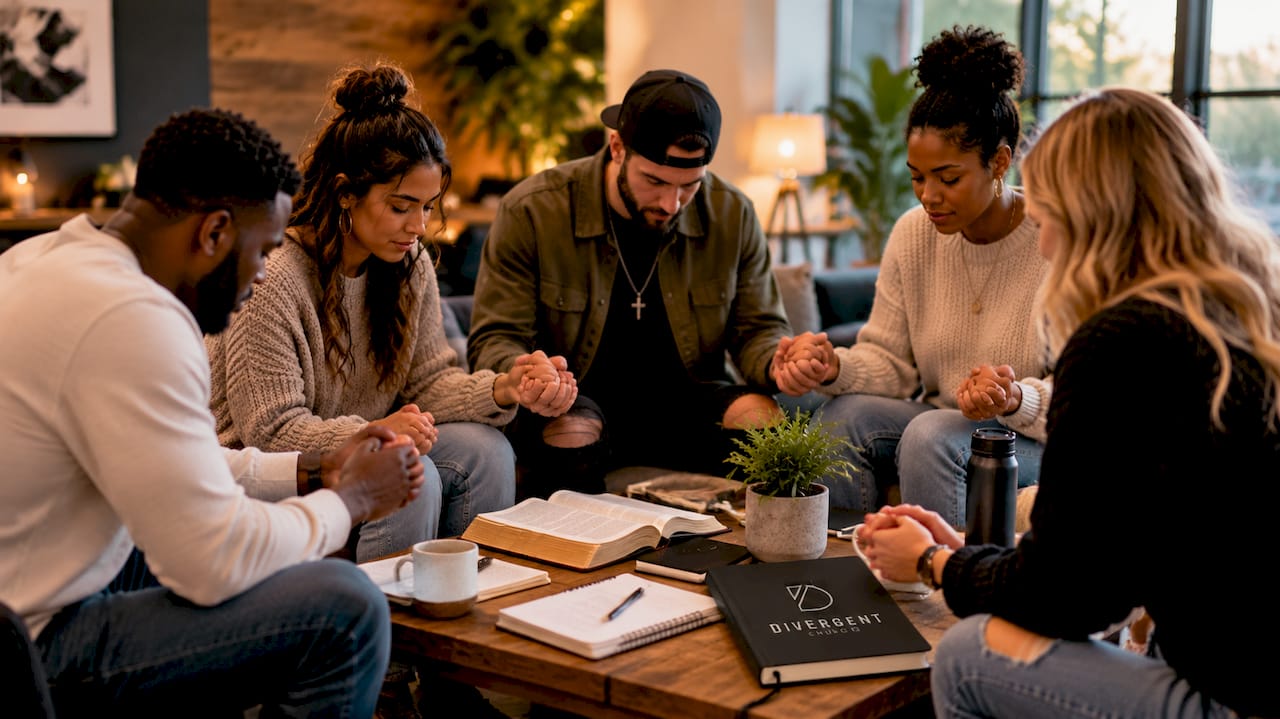
The importance of prayer in worship becomes most visible in moments of collective intercession. When a congregation prays together for a family facing illness, a city grappling with injustice, or a leader carrying heavy responsibility, something shifts. People who might otherwise remain strangers find themselves bound by shared concern and shared faith. This is the social architecture of prayer, and it is deeply practical.
Medical expert Dr. José Jorge Maya identifies communal prayer as an antidote to social isolation, one of the most significant health risks of our time. Social isolation is not merely an emotional inconvenience. It carries measurable physiological consequences, and regular participation in communal worship directly counters those effects.
The unifying effects of prayer in church include:
Shared focus: Prayer directs the entire congregation toward God, creating a unified spiritual orientation regardless of individual background or circumstance.
Emotional solidarity: Praying for one another’s needs cultivates genuine empathy and strengthens relational bonds within the community.
Reduced social barriers: The posture of prayer levels the room. Status, profession, and personal history become secondary to shared dependence on God.
Belonging and inclusion: New attendees and long-term members alike are drawn into participation when prayer is accessible and sincere.
Spiritual accountability: Praying together creates a culture where people hold one another’s faith journeys with care and intentionality.
Pro Tip: Keep corporate prayer accessible by using plain, conversational language rather than formal religious phrasing. Public prayer should be simple and sincere so that every person in the room can genuinely say “amen.”
What biblical and theological foundations establish prayer as essential?
The early church did not treat prayer as one programme among many. Acts 2:42 records that the first believers devoted themselves to prayer alongside the apostles’ teaching, fellowship, and the breaking of bread. This fourfold pattern was not accidental. It was the structural DNA of a community that understood its total dependence on God. Corporate prayer was, from the beginning, a primary means of congregational formation.
Paul’s instructions in 1 Timothy 2:1-7 extend this foundation further. He calls for “petitions, prayers, intercession and thanksgiving to be made for all people,” explicitly connecting intercessory prayer with God’s desire for all humanity to be saved. Prayer, in Paul’s theology, is not a private spiritual exercise. It is a missional act. When the church prays for the world, it aligns itself with God’s redemptive purposes.
The theological distinction between individual and corporate prayer matters here. Private prayer forms the individual. Corporate prayer forms the community. Both are necessary, but they serve different functions in the life of faith.
Biblical teaching | Modern church practice |
Acts 2:42: prayer as a core devotional practice | Many churches treat prayer as a brief opening formality |
1 Timothy 2:1-7: intercession for all people as missional | Intercession often limited to internal congregational needs |
Prayer as dependence on God, not human competence | Churches can drift toward programme-driven self-reliance |
Corporate prayer as spiritual formation | Individual quiet time prioritised over communal prayer gatherings |
This gap between biblical precedent and modern practice is not a minor liturgical concern. Churches that neglect corporate prayer risk division and self-reliance, and prayer functions as a genuine barometer of a congregation’s spiritual health. Where prayer is marginalised, human strategy tends to fill the space.
Pro Tip: Separate prayer from announcements in your service order. Unhurried, intentional prayer signals to the congregation that this is not a transition moment but a sacred one.
What are the spiritual and mental health benefits of praying in church?
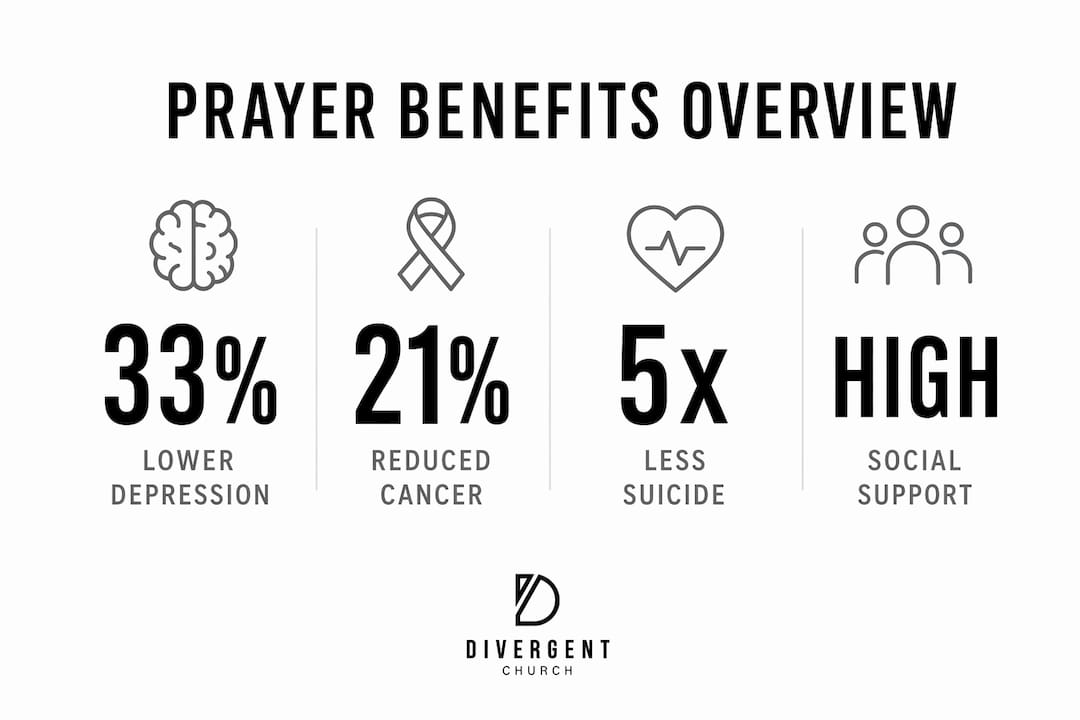
The benefits of praying in church are not confined to the spiritual realm. Clinical research published in 2026 presents a striking picture of what regular church attendance, anchored in prayer and worship, does to the human body and mind. Weekly church attendance is associated with a 33% lower risk of depression, a 21% lower cancer risk, and a 27% reduction in all-cause mortality. These are not marginal improvements. They represent a measurable shift in life outcomes.
The neurological dimension is equally compelling. MRI studies show that weekly churchgoers have lower cortisol and reduced amygdala activity, which are the biological markers of anxiety and chronic stress. Prayer, silence, and gratitude practices within worship directly calm the nervous system. This is not a metaphor. It is measurable physiology.
Health outcome | Impact for weekly churchgoers |
Depression risk | 33% lower |
Cancer risk | 21% lower |
All-cause mortality | 27% reduced |
Suicide risk | Five times less likely |
Smoking and excessive drinking | 29% and 34% less respectively |
Weekly churchgoers are five times less likely to commit suicide and report stronger social support and higher levels of hope. This finding reframes the prayer significance in religious gatherings from a purely theological question to a public health one. A church that prays together is, quite literally, a community that keeps people alive and well.
Dr. José Jorge Maya attributes much of this effect to the structured emotional regulation that communal worship provides. Regular worship calms the nervous system through practices of silence, reflection, and gratitude. When prayer is woven into the fabric of a church gathering, it gives people a regular, embodied practice for processing grief, fear, and uncertainty in the presence of God and community. That combination is extraordinarily powerful.
The spiritual dimension deepens these effects further. Prayer within a supportive church community provides a framework of meaning and purpose that secular wellbeing practices rarely replicate. When people pray together, they are not simply managing stress. They are orienting their lives toward something greater than themselves.
How does prayer shape church identity, mission, and spiritual growth?
Prayer is the spiritual compass of a church community. It does not merely support the mission. It reveals and refines it. A congregation that prays together regularly develops a shared attentiveness to God’s voice, and that attentiveness shapes every decision from pastoral direction to community outreach. Prayer shapes and strengthens church unity, supporting mental health and fostering a spiritually vibrant community that knows where it is going and why.
Corporate prayer also functions as a school of discipleship. Prayer is primarily a “caught” discipline, meaning that hearing and joining in corporate prayer teaches individuals the language and posture of dependence on God. This is why prayer meetings are not simply a support mechanism for the “real” ministry of the church. They are the ministry. They form disciples in ways that sermons alone cannot.
The practical functions of prayer in shaping church life include:
Spiritual direction: Corporate prayer creates space for the congregation to discern God’s purposes together rather than following a leader’s vision alone.
Intercessory accountability: Praying for leaders, for one another, and for the city builds a culture of mutual care and responsibility.
Mission alignment: When a church prays for its neighbourhood, its university campuses, and its workplaces, its mission naturally extends into those spaces.
Spiritual maturity: Corporate prayer provides regular practice in spiritual listening, faith response, and experiencing the Holy Spirit communally, driving formation beyond individualism.
Community cohesion: Shared prayer creates shared memory and shared hope, the two ingredients that hold a community together through difficulty.
At Divergent Church, this understanding shapes how we approach spiritual development as a community. Prayer is not a programme we run. It is a posture we cultivate, woven into Life Communities, gathered worship, and the everyday rhythms of city life in Canberra.
Key takeaways
Prayer is the irreplaceable foundation of church life, unifying congregants, forming disciples, and producing measurable spiritual and physical wellbeing.
Point | Details |
Prayer unifies the congregation | Shared prayer dissolves social barriers and builds genuine belonging across diverse groups. |
Biblical precedent is clear | Acts 2:42 and 1 Timothy 2:1-7 establish corporate prayer as central to church identity and mission. |
Health benefits are measurable | Weekly churchgoers show 33% lower depression risk and are five times less likely to commit suicide. |
Prayer forms disciples | Corporate prayer teaches the language and posture of dependence on God in ways sermons alone cannot. |
Neglecting prayer costs the church | Churches that sideline corporate prayer drift toward self-reliance and risk division. |
Prayer is not a warm-up act
I have sat in enough church services to recognise the moment when prayer becomes a formality. The leader bows their head, says something brief and polished, and then the “real” service begins. I understand how it happens. Time pressure, programme anxiety, the fear of awkward silences. But I think this pattern quietly communicates something damaging: that prayer is the preamble, not the point.
What I have observed in communities where prayer is genuinely central is something qualitatively different. People arrive differently. They listen differently. They leave differently. There is a quality of attentiveness in a congregation that prays together with intention, a sense that something real is happening and that God is actually present and active. That is not a feeling to be managed. It is the whole point.
The shift from performance to participation in prayer is one of the most significant things a church can cultivate. When prayer is led with simplicity and sincerity, as a pastoral act rather than a liturgical obligation, people lean in. They add their own silent agreement. They carry the prayers home. They begin to pray like that themselves. This is how corporate prayer forms individual disciples, not through instruction but through immersion.
My encouragement to anyone exploring church life is this: pay attention to how a community prays. It will tell you more about the health of that church than almost anything else.
— Josh
Experience prayer and community at Divergent Church
At Divergent Church in Canberra, prayer is not a Sunday formality. It is the heartbeat of everything we do, from our gathered worship to our Life Communities meeting across the city. If you are curious about what it looks like to be part of a community genuinely shaped by prayer, Scripture, and mission, we would love for you to take the next step with us.
Explore the Discipleship Hub for resources that will deepen your prayer life and faith habits. If you are new to church or simply wondering where to begin, our Next Steps page is the right place to start. And if you want to experience communal prayer in an everyday, relational setting, our Life Communities are small groups built around exactly that.
FAQ
What is the role of prayer in church?
Prayer in church is the collective act of communicating with God, expressing dependence, interceding for others, and aligning the congregation with God’s purposes. It is foundational to worship, discipleship, and community life, not an optional addition to the service.
How does prayer benefit mental health in a church setting?
Clinical research shows that weekly church attendance, which centres on prayer and worship, is associated with a 33% lower risk of depression and reduced cortisol and amygdala activity. Dr. José Jorge Maya identifies communal prayer as a direct antidote to social isolation and chronic stress.
Why is corporate prayer different from private prayer?
Corporate prayer forms the community, while private prayer forms the individual. Hearing and joining in collective prayer teaches believers the language and posture of dependence on God, making it a primary means of congregational discipleship and spiritual formation.
What does the Bible say about prayer in church?
Acts 2:42 shows the early church devoted itself to corporate prayer as one of its four core practices. Paul’s instructions in 1 Timothy 2:1-7 frame intercessory prayer as a missional act, connecting the church’s prayer life directly to God’s desire for all people to be reached.
How does prayer shape a church’s mission?
Prayer functions as a congregation’s spiritual compass, creating shared attentiveness to God’s voice and aligning the community’s decisions and outreach with God’s purposes. Churches that prioritise corporate prayer develop a culture of dependence on God rather than self-reliance, which directly strengthens their mission and unity.
Recommended
Comments