
Tips for new Christians: your practical faith guide


Starting your life as a follower of Jesus is one of the most significant things you will ever do. And if you’re wondering what comes next, here are the most practical tips for new Christians to get you grounded and growing from day one:
Get baptised. Baptism is your public declaration that you belong to Jesus. It’s not what saves you, but it’s the first act of obedience Christ calls every believer to (Matthew 28:19).
Start reading the Bible. Begin with the Gospel of John, which has 21 chapters and works beautifully as a 21-day reading habit.
Pray daily. Even five minutes each morning shapes your relationship with God more than you’d expect.
Attend church regularly. The local church is where discipleship, accountability, and genuine community happen.
Find your people. Join a small group or life group where you can ask honest questions and be known.
Be patient with yourself. Spiritual growth takes truth, grace, and time. None of it happens overnight.
Lean on Scripture, not feelings. Your emotions will fluctuate. God’s Word does not.
The road ahead is long and genuinely good. What follows is a deeper look at each of these starting points, shaped for new believers in Australia in 2026.
Practical habits that will actually help you grow in faith
The most common mistake new believers make is treating spiritual growth as something that just happens. It doesn’t. Spiritual growth requires active obedience and intentional discipline, not passive waiting. Think of it less like a feeling and more like a garden: you plant, you water, you show up.
Here are the habits that make the biggest difference:
Daily Bible reading. Start with the Gospel of John. Read one chapter a day. The goal isn’t speed; it’s familiarity with Jesus. As you grow, move into Paul’s letters and the Psalms.
Scripture memorisation. Committing key passages to memory gives the Holy Spirit something to work with when you need it most. Start with Philippians 4:6–7 or John 3:16.
Prayer using the ACTS framework. Structure your prayer around four movements: Adoration (praise God for who He is), Confession (bring your failures honestly), Thanksgiving (name what He’s done), and Supplication (ask for what you and others need). Even five minutes daily builds a rhythm that transforms over time.
Fellowship with other believers. Attending church and joining a small group aren’t optional extras. They are the primary places where your faith is tested, sharpened, and sustained.
Generosity. Giving financially and practically to your church community is a spiritual discipline that trains you to hold things loosely and trust God’s provision.
Silence and reflection. In a world of constant noise, carving out quiet time to be aware of God’s presence is countercultural and deeply formative.
One thing worth saying plainly: you don’t need to do all of this perfectly from week one. Sustainable micro-rhythms, like a short daily devotion rather than an hour you can never maintain, are more transformative than bursts of intensity followed by burnout. Start small. Stay consistent.
Pro Tip: Set a specific time each morning for Bible reading and prayer, even if it’s just before your first coffee. Attaching a new habit to an existing one is one of the most reliable ways to make it stick.

What to expect when you attend church in Australia for the first time
Walking into a church for the first time can feel a little like arriving at a party where everyone else seems to know the rules. The good news is that most contemporary Australian churches are genuinely welcoming, and the unwritten rules are far simpler than they look.
Here’s what you can realistically expect:
Casual dress is the norm. Most Australian churches, particularly contemporary ones, have no dress code. Jeans and a t-shirt are completely fine. Come as you are.
Arrive 10–15 minutes early. This gives you time to find parking, grab a seat, and settle in without the pressure of walking in mid-song.
Singing is optional. You won’t be called out for standing quietly during worship. Most people are focused on their own encounter with God, not on whether you’re singing along.
Giving is voluntary. An offering will likely be collected, but there’s no expectation for visitors to contribute. If you’d like to give, you can; if not, simply pass it along.
Communion varies by church. Some churches invite all believers to participate; others reserve it for members. If you’re unsure, watch what others do or quietly ask a greeter.
Children’s programmes are common. Many churches run dedicated kids’ programmes during the service, with a check-in system for safety. Ask at the door when you arrive.
You can remain anonymous. Visitors who prefer privacy don’t need to fill in a connection card or introduce themselves. Most churches allow you to observe without any pressure to engage.
Pro Tip: If you want to connect without the awkwardness of not knowing anyone, look for a greeter or welcome team member near the entrance and simply say, “I’m new here.” They’ll point you toward a newcomer class or a friendly face, and it’s genuinely low-pressure. You can also read Divergentchurch’s first-time visitor guide for Canberra-specific expectations.
Why Christian community is not optional for new believers
The gospel doesn’t just reconcile you to God. It reconciles you to His people. That’s not a nice sentiment; it’s a theological reality that shapes everything about how the Christian life is meant to be lived.
The local church is the primary context for spiritual formation, accountability, and discipleship. Personal devotion matters deeply, but it was never designed to carry the full weight of your growth alone. The New Testament describes believers as parts of a body, stones in a temple, and members of a family. None of those images work in isolation.
Here’s how to actively build that community:
Join a small group or life group. This is where real relationships form. A Sunday service gives you a crowd; a small group gives you people who actually know your name and your struggles.
Seek a mentor. Find someone who has walked with Jesus longer than you have and is willing to meet regularly. Ask questions. Listen more than you speak.
Serve somewhere. Volunteering in your church, whether in kids’ ministry, hospitality, or setup, puts you alongside people and gives you a sense of belonging that passive attendance never will. Divergentchurch’s step-by-step church involvement guide is a practical starting point.
Practise forgiveness. The local church is full of imperfect people, which means you will be hurt and you will hurt others. Learning to forgive and receive correction within community is one of the most formative things you’ll do as a believer.
Be consistent. Showing up week after week, even when you don’t feel like it, is what builds trust and depth in relationships. Community is not built in a single Sunday.
Encourage others. You don’t need to be a mature believer to encourage someone. A text, a prayer, a meal. These things matter more than you know.
Finding the right spiritual community takes time, but the search is worth it. The relationships you build in a faithful local church will carry you through seasons you can’t yet imagine.
Spiritual growth is a process, not a performance
One of the most liberating things you can understand early in your faith is this: spiritual maturity is not a destination you arrive at. It’s a direction you keep moving in. Scripture describes it as growing from milk to solid food (Hebrews 5:12–14), from seedling to fruit-bearing plant. Neither happens quickly, and neither can be forced.
There are three elements at the heart of genuine spiritual growth:
Truth. God’s Word is the raw material of transformation. It corrects, trains, and challenges you. Reading Scripture isn’t just a devotional exercise; it’s how your mind is renewed (Romans 12:2).
Grace. You will fail. You will doubt. You will have weeks where prayer feels hollow and the Bible feels dry. Grace is God’s patient forgiveness meeting you in those moments, not as an excuse to stay there, but as the fuel to keep going.
Time. Spiritual maturity looks different for every person. The only standard worth measuring yourself against is Scripture, not the person sitting next to you in church who seems to have it all together.
Following Christ involves a long road of obedience. New believers should avoid seeking emotional highs or quick fixes and instead embrace the patient, costly work of discipleship.
What does growth actually look like in practice? A growing desire to spend time with God. A hunger for Scripture that deepens rather than fades. A willingness to obey even when it costs something. These are the signs that the seeds planted in you are taking root.
Understanding what spiritual support looks like in a community context can also help you identify what to look for in a church and in the relationships around you.
How Divergentchurch in Canberra helps new Christians find their footing
Divergentchurch exists in Canberra not simply as a Sunday gathering, but as a community shaped by Scripture, centred on Jesus, and expressed through everyday life. For new believers in Canberra, that means there are real, practical pathways into growth and belonging from the moment you walk through the door.
Here’s what Divergentchurch offers new Christians specifically:
Next Steps. A clear, practical pathway for new believers to understand what following Jesus looks like and how to take the next step in faith.
Discover Jesus. Resources for those who are still exploring the Christian faith or who want to understand the foundations of what they’ve just stepped into.
Life Communities. Small groups that meet throughout Canberra’s neighbourhoods, universities, and workplaces. These are the spaces where real discipleship happens in the context of genuine relationship.
Discipleship Hub. A central resource for growth, training, and formation for disciples at every stage of the journey.
Follow Jesus. Guidance for those who want to move from curiosity to committed discipleship, with practical tools for daily life.
Mentorship and accountability. Divergentchurch actively cultivates a culture where newer believers are connected with more mature ones, not as a programme, but as a natural expression of community life.
Local and global mission. From Canberra’s university campuses to global partnerships, Divergentchurch invites new believers into a story bigger than themselves from the very beginning.
Canberra is a city of transient populations, students, and young professionals. Divergentchurch understands that context and builds community accordingly, with intentional hospitality and a genuine commitment to helping people find their place.
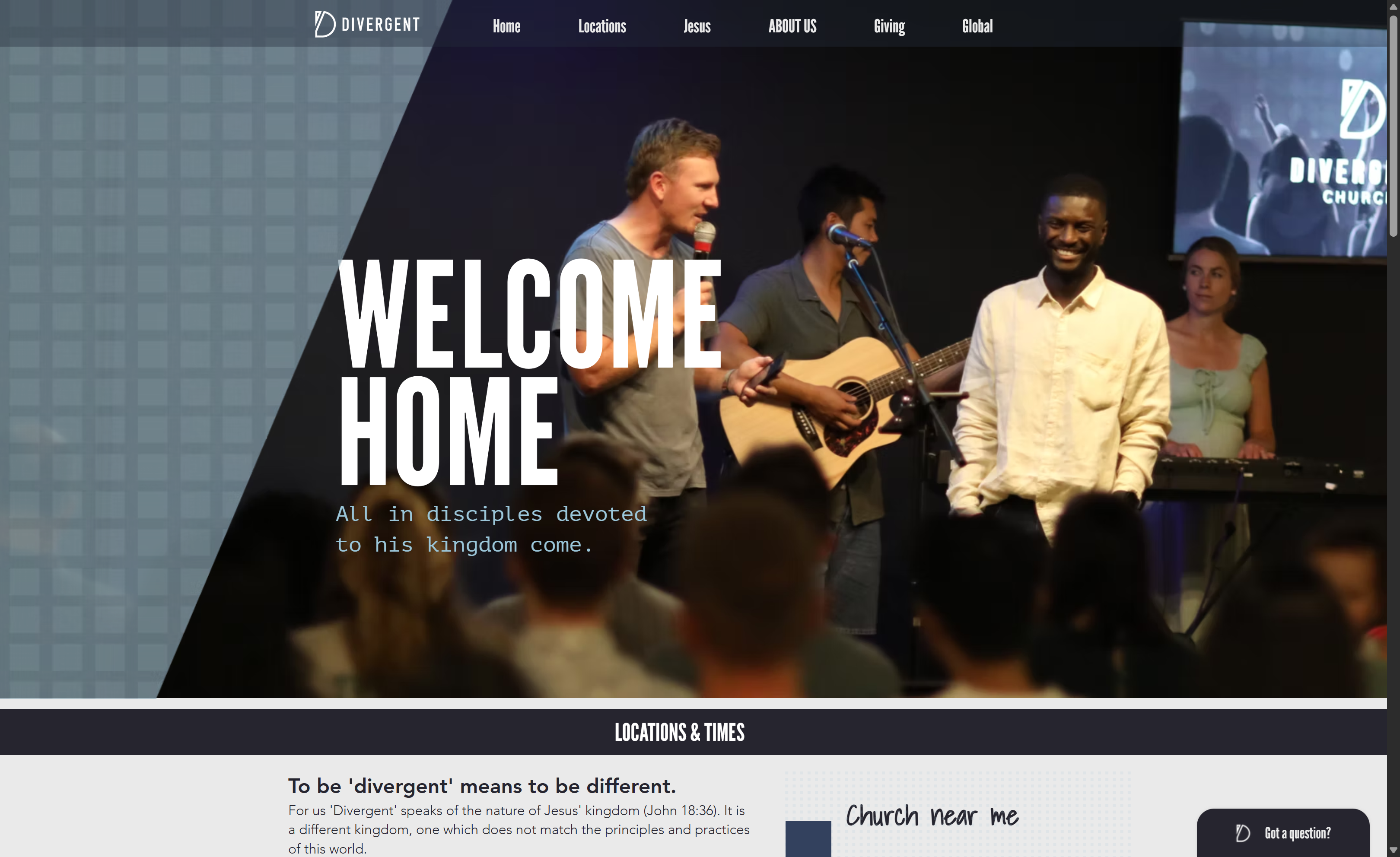
Whether you’re brand new to faith or just new to Canberra, the Discipleship Hub is the best place to start exploring what growing in Jesus looks like within this community.
Key takeaways
Growing as a new Christian requires consistent spiritual disciplines, genuine community, and patient trust in God’s grace across time.
Point | Details |
Start with the Gospel of John | Its 21 chapters make it ideal for a 21-day daily reading habit to build Scripture familiarity. |
Use the ACTS prayer framework | Structure daily prayer around Adoration, Confession, Thanksgiving, and Supplication for depth and consistency. |
Join a local church and small group | The local church is the primary context for discipleship, accountability, and spiritual formation. |
Growth needs truth, grace, and time | Measure your progress against Scripture, not others, and trust God’s patient forgiveness along the way. |
Divergentchurch supports new believers | Resources like Next Steps, Life Communities, and the Discipleship Hub provide clear pathways for growth in Canberra. |
Recommended
Comments